





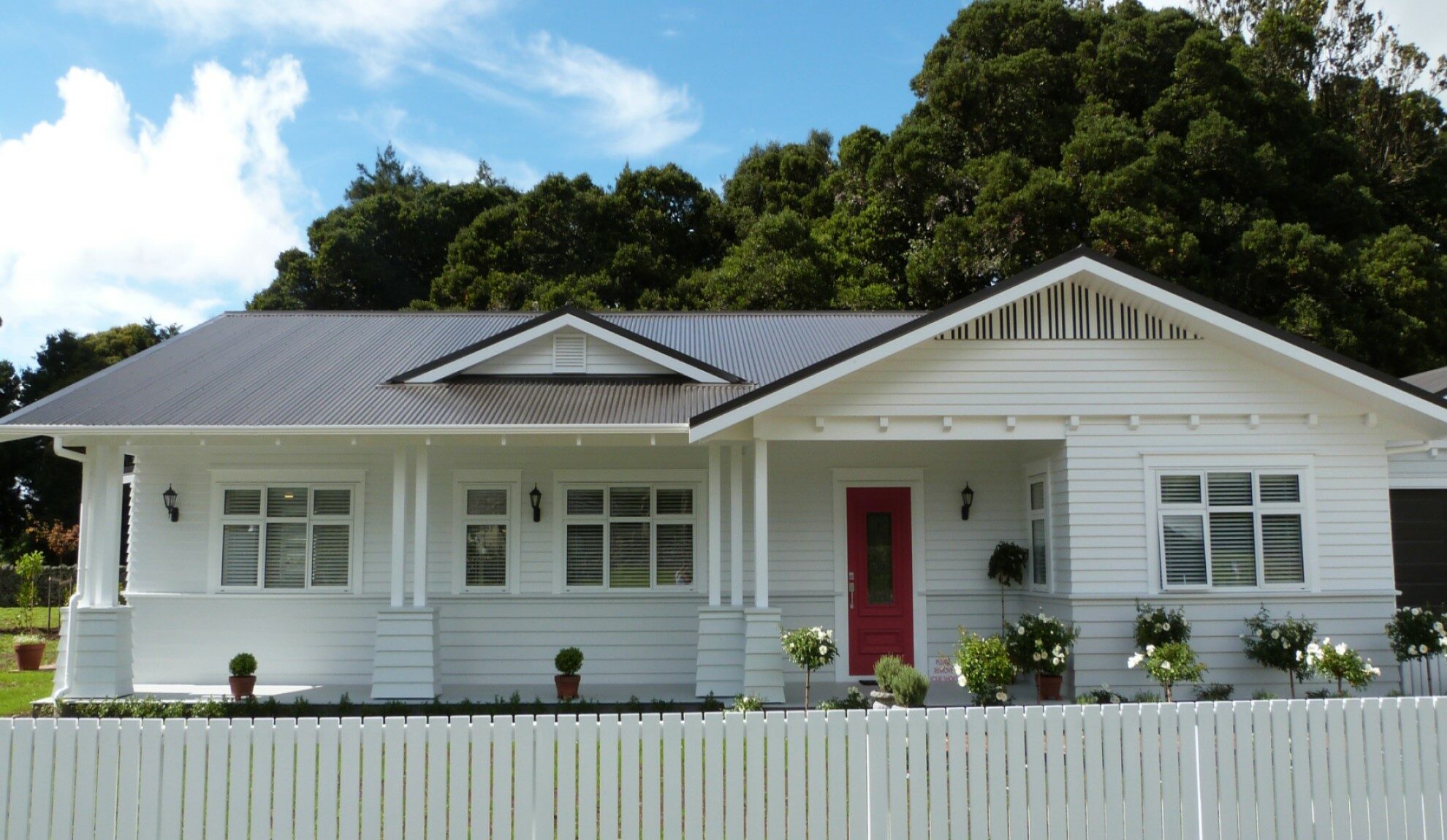
The roof is roughly half of what you see when you look at a character home from the street. Pitch, form and the details along the edges do more for the period read than the covering material does — which is useful, because it means modern roofing can carry a traditional look convincingly.
Here is what decides it: the form your era calls for, the material options, and the edge details that finish the silhouette.
Roof form: the era sets the pitch
This is the part that cannot be corrected with material choice:
- Villa — steep, hipped or gabled. A tall, steeply pitched roof is fundamental to the villa silhouette, often with a projecting gable over a bay window.
- Bungalow — shallower and gabled, with deep eaves. The low, sheltering roofline is the bungalow's defining gesture, and the eave overhang is part of it.
- Cottage and pioneer — simple gables. Plainer forms, without the villa's complexity.
Roof complexity is also a cost driver: bays, gables and returns multiply framing, flashing and labour, which is why a simpler main roof with one well-placed gable is a common budget strategy — see building a character home on a budget. The era differences are set out in villa vs bungalow.
Roofing materials for a character home
| Material | Character read | Notes |
|---|---|---|
| Long-run corrugate | Strong — corrugate is the traditional NZ roof | The common choice; long runs mean fewer joins, and the profile suits both villas and bungalows |
| Pressed metal tile | Reads as tile from the street | Textured finish, lightweight; a period alternative where a tiled look is wanted |
| Corrugate, short-run or heritage profiles | Closest to original | Narrower profiles and traditional gauges; specialist and generally dearer |
Corrugated iron has roofed New Zealand houses since the villa era, so a long-run steel roof is not a compromise on authenticity — it is the original material in a modern form.
The edge details that finish the look
Most of the period signal lives in the last 300 millimetres of the roof:
- Barge boards and fascia. Depth and profile matter; skinny modern trim undermines a good roofline.
- Finials. The turned spike at the gable apex — small, inexpensive, and unmistakably period.
- Spouting profile. Ogee or half-round spouting reads traditional where a plain modern gutter reads flat.
- Eave depth and soffit lining. Especially on a bungalow, where exposed rafter ends are part of the vocabulary.
These are the cheapest authenticity per dollar on the whole building — the roofing equivalent of the point made in character home features that matter most.
Coastal and exposure considerations
Roofing is the most exposed surface on the house, so the corrosion zone matters. Under NZS 3604, zone D — the sea spray zone — covers land within 500m of the sea and 100m of tidal estuaries, and it drives material and fixing selection. Roof fixings and flashings need specifying for the zone, and coastal sites benefit from regular washdowns to remove salt.
This applies to a lot of Heritage's territory — the Far North and much of the Hibiscus Coast among it. Confirm the exposure zone at design stage rather than assuming it from the view.
Frequently asked questions
What roof suits a villa versus a bungalow?
Villas have steep, tall roofs — hipped or gabled, often with a projecting gable over a bay window. Bungalows have shallower gabled roofs with deep, sheltering eaves, frequently with exposed rafter ends. The pitch is fundamental to each silhouette and cannot be corrected by material choice.
Is corrugated iron authentic for a character home?
Yes. Corrugated iron has roofed New Zealand houses since the villa era, so long-run steel is the original material in a modern form rather than a compromise. Narrower heritage profiles and traditional gauges are available where the closest possible match matters, though they are generally more expensive.
What roofing details make a house look period?
The edge details: barge board and fascia depth and profile, a turned finial at the gable apex, ogee or half-round spouting rather than a plain modern gutter, and appropriate eave depth with soffit lining — including exposed rafter ends on a bungalow. They are inexpensive relative to their effect.
Does roof complexity add much cost?
Yes. Bays, gables and returns multiply framing, flashing and labour, so a complex roof costs considerably more than a simple one of the same area. A common budget strategy is a straightforward main roof with one well-placed gable or bay doing the visual work.
Does a coastal site change the roofing specification?
Yes. Under NZS 3604, zone D — the sea spray zone — covers land within 500 m of the sea and within 100 m of tidal estuaries and sheltered inlets, and it drives material and fixing selection. As the most exposed surface on the building, roofing and its fixings need specifying for the zone, and coastal roofs benefit from regular washdowns.
Prefer to talk? Call Heritage Homes on 0508 40 30 20 or email sales@hhomes.nz.