





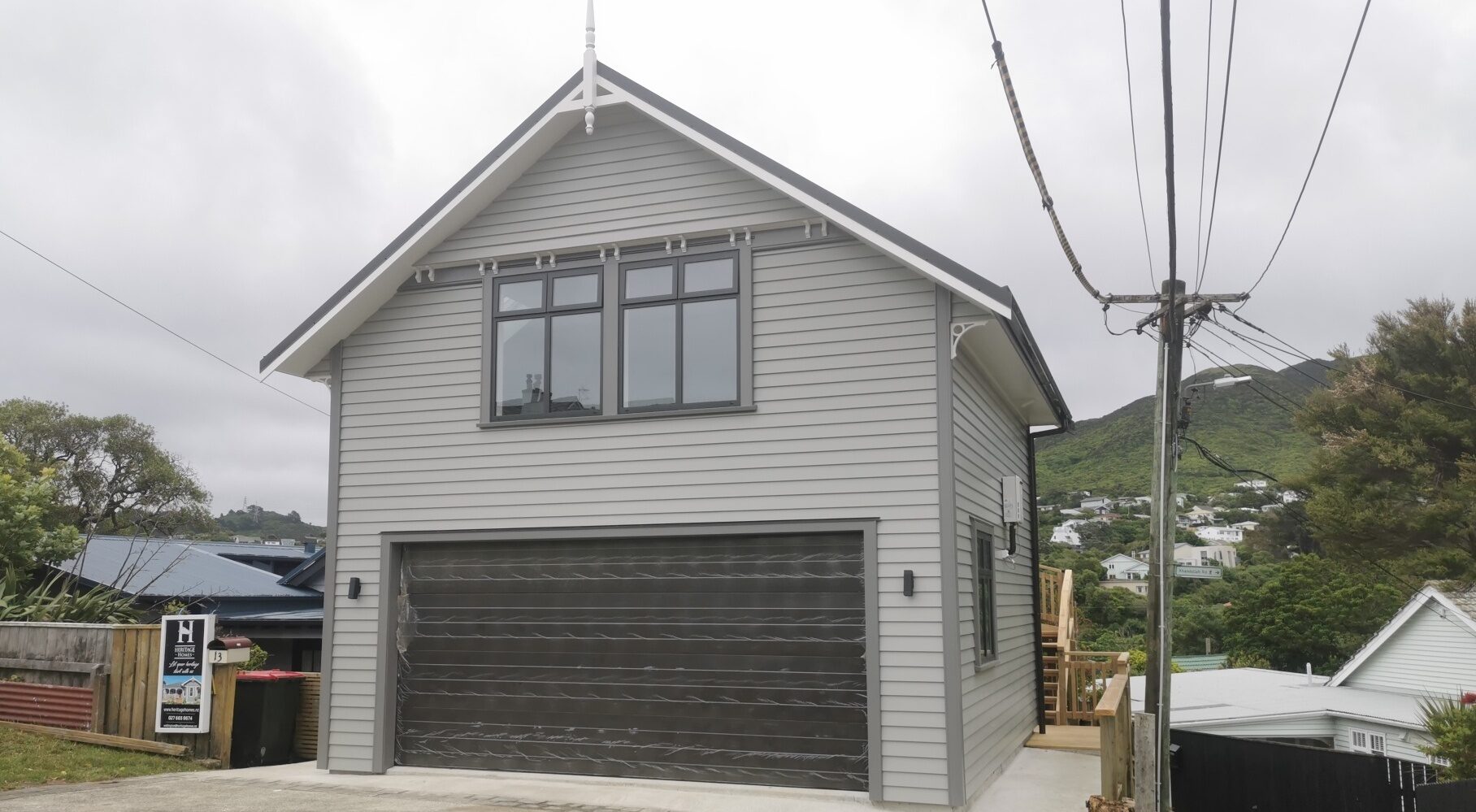
Since 15 January 2026, you can build one detached, self-contained dwelling of up to 70m² on your property without a building consent — and without a resource consent. It is the biggest change to small dwellings in New Zealand in years, and it opened a door that had been shut for a long time.
It is also widely misunderstood. “No consent” does not mean “no rules”: the exemption comes with a specific set of limits, a council notification process at both ends, and a requirement that the work be done by professionals. Here is what actually qualifies, and how it differs from the sleepout exemption people confuse it with.
Granny flat or sleepout? They are different exemptions
These get used interchangeably and they are not the same thing at all. The dividing line is whether the building is self-contained.
| Granny flat (minor dwelling) | Sleepout | |
|---|---|---|
| Maximum size | 70m² | 30m² |
| Kitchen | Yes — it is self-contained | No — cooking facilities are not permitted |
| Bathroom | Yes | No — the main house's facilities must be readily available and used |
| Storeys | Single storey, detached | Single storey, detached |
| Building consent | Not required if it meets the exemption | Not required if it meets the exemption |
| Resource consent | Permitted activity in most residential and rural zones | Subject to the district plan |
| Council contact | PIM before starting, notification on completion | No PIM required under the sleepout exemption |
In short: if it has a kitchen, it is a granny flat and the 70m² rules apply. If it is a bedroom or studio that relies on the main house for cooking and bathing, it is a sleepout under the long-standing 30m² exemption.
What qualifies for the 70m² granny flat exemption
The exemption is specific, and missing any one of these puts you back into the consent process (Building Performance):
- 70m² or less, single storey, and detached from the main house.
- Self-contained — it is a dwelling, with its own kitchen and bathroom.
- A simple design, using lightweight materials for the roof and frame, with straightforward plumbing and drainage.
- One per site. The exemption covers a single compliant detached minor dwelling.
- Built by professionals. Restricted building work must be carried out or directly supervised by a Licensed Building Practitioner.
On the planning side, a National Environmental Standard makes one compliant detached minor dwelling a permitted activity in most residential and rural zones — so where the standards are met, councils cannot require a resource consent for the dwelling itself.
What you still have to do
This is the part that gets skipped, and it is where projects come unstuck.
- It must comply with the Building Code. The exemption removes the consent, not the standard. Insulation, weathertightness, structure and services all still have to meet Code.
- Get a PIM before you start. A Project Information Memorandum from your council is required before building work begins.
- Notify the council when you finish, providing documentation such as final plans, Records of Work and certificates of compliance.
- Use qualified trades. Restricted building work needs an LBP carrying out or supervising it.
Without a council inspector checking the work at each stage, the quality of who builds it matters more than it does on a consented job, not less. If your project falls outside the exemption — two storeys, over 70m², attached to the house — the normal process applies, and that is covered in getting a new build through council.
What you can build in 70m²
Seventy square metres is more than people assume: comfortably a one-bedroom home, and a well-planned two-bedroom at the top of the range. A compact character design suits this brief particularly well — a cottage or small villa reads as intentional beside an existing period home, where a modern unit reads as an addition.
Heritage Homes builds new villas, bungalows, cottages, garages, cabins, barns and stables across New Zealand, and the compact end of the plan range sits naturally in this space — see cottage and small home plans. Whether the exemption applies to your site still depends on your section and district plan, so check before you design: choosing a section covers what to look for.
Frequently asked questions
Can you build a granny flat without consent in NZ?
Since 15 January 2026, yes — one detached, self-contained dwelling of up to 70m² can be built without a building consent and without a resource consent, provided it meets the exemption criteria. It must be single storey, detached, of simple design using lightweight roof and frame materials, and built by professionals with restricted building work carried out or supervised by a Licensed Building Practitioner.
What is the difference between a granny flat and a sleepout?
Self-containment. A granny flat is a dwelling with its own kitchen and bathroom, and falls under the 70m² exemption. A sleepout provides sleeping accommodation only — it cannot include cooking facilities, and the main house's sanitary facilities must be readily available and used. Sleepouts fall under the long-standing exemption for single-storey detached buildings up to 30m².
Do I need to tell the council about an exempt granny flat?
Yes, at both ends. You must obtain a Project Information Memorandum (PIM) from your council before building work starts, and notify the council on completion with documentation such as final plans, Records of Work and certificates of compliance. The exemption removes the building consent, not the council relationship.
Does an exempt granny flat still have to meet the Building Code?
Yes. The exemption removes the requirement for a building consent, not the requirement to comply with the Building Code. Insulation, weathertightness, structure, plumbing and drainage all still have to meet the standard — which is why the exemption requires the work to be done by professional tradespeople.
How many granny flats can I build on one property?
The exemption covers one compliant detached minor dwelling per site. A National Environmental Standard makes that single dwelling a permitted activity in most residential and rural zones, so where the standards are met a resource consent cannot be required for it. Anything beyond one falls outside the exemption.
Prefer to talk? Call Heritage Homes on 0508 40 30 20 or email sales@hhomes.nz.