





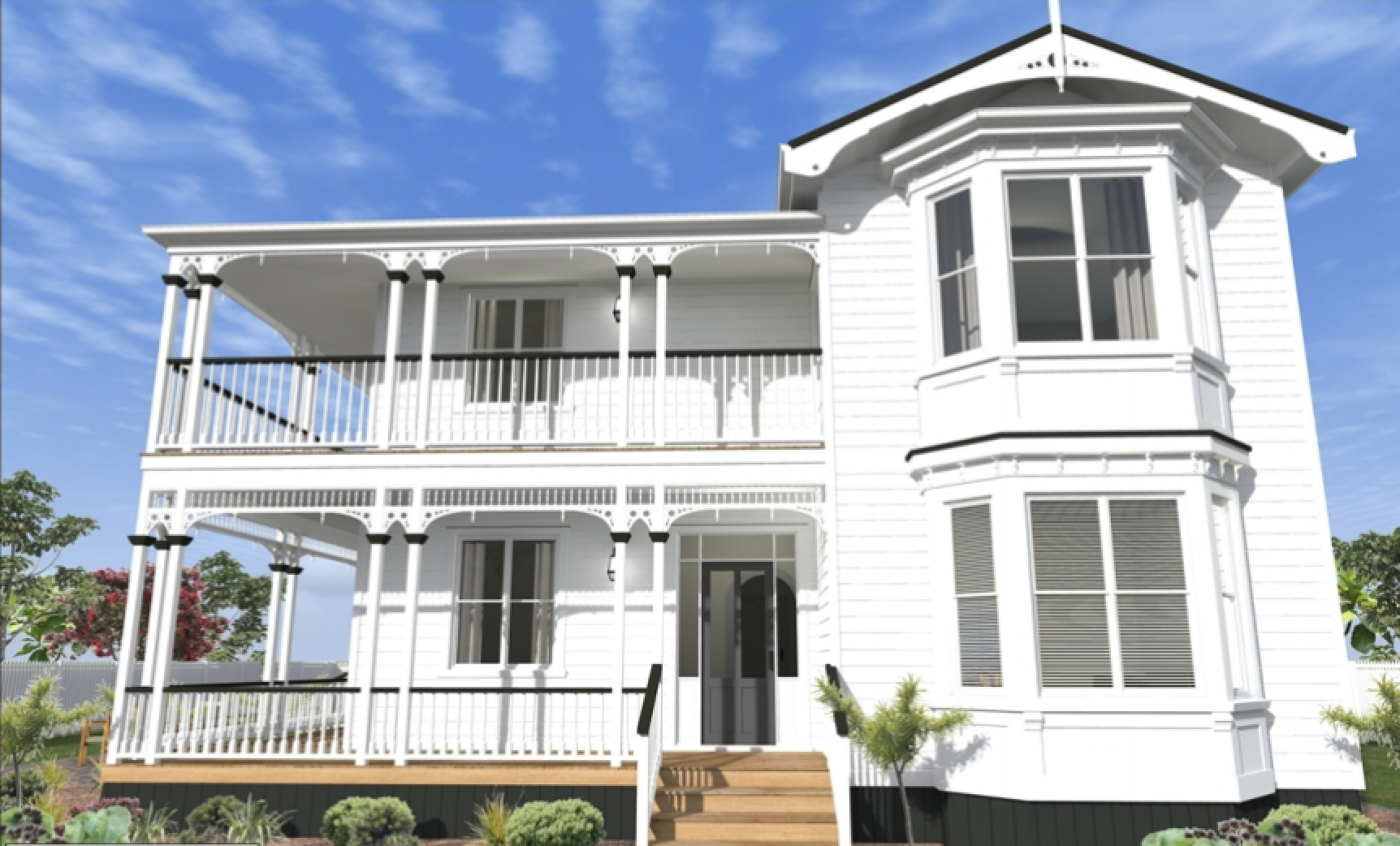
The two-storey villa is a real New Zealand type, not a modern invention. When a second storey makes sense, what it actually costs compared with building wide, and which sections suit each.
Is a two-storey home cheaper or dearer to build?
You will find confident answers in both directions, and both are half right.
The case for cheaper per square metre: a two-storey home stacks its floor area, so the same house needs roughly half the roof and half the foundation. Those are two of the most expensive elements in any build.
The case for dearer: stacking adds a stairwell, more structure, scaffolding, and a longer, more involved build programme. Working at height is slower and costs more per hour of labour.
The honest answer is that these largely cancel, and which comes out ahead depends on your site and specification rather than on storey count. What is more reliable is the land arithmetic: where sections are expensive or small, building up preserves the section and can save far more than the construction difference either way. Indicative character build costs sit around NZ$3,200–$5,000+ per square metre (2026) regardless — the full picture is in what it costs to build a character home in NZ.
When a second storey is the right answer
- A compact or narrow section. Stacking gets you the floor area without the house swallowing the yard, and helps stay within building coverage and impervious surface limits.
- A view worth reaching. The obvious one, and often the deciding one on coastal or elevated sites.
- Separating living from sleeping. Bedrooms upstairs, living below is a natural split that a single level has to achieve with corridors instead.
- Street presence. A two-storey villa has a formality and scale that a single-storey design cannot match, which matters on a prominent site.
And when it is not: a wide, flat rural or lifestyle section usually favours building out, where a bungalow's low spreading form belongs and where stairs buy you nothing. Single-level living also ages better, which is worth weighing if the house is meant to be a long-term home.
The two-storey villa is a genuine NZ type
Worth saying clearly, because people assume a period home means a single level: two-storey villas are part of New Zealand's actual building history, not a modern liberty. The grander villas of the boom decades either side of 1900 frequently ran to two storeys, typically with a double verandah — one at ground level and one above it, both with turned posts and fretwork.
That double verandah is the defining element. It is what stops a two-storey weatherboard house reading as a modern box in period dress, and it is why the proportions matter even more at this scale — the same principle set out in character home features that matter most. The Fendalton in the Heritage Homes range is a two-storey villa of exactly this type.
What changes in the design and the build
- The stair becomes a feature. In a character home it is a joinery item, not a service element — newel posts, balusters and a hall that gives it room.
- Stud heights compound. Generous ceilings on two levels make a tall building. That is the look, and it also means more cladding, more scaffolding and more to heat.
- Height and recession planes. District plan height limits and recession planes bite far harder on two storeys, especially on narrow sites — check them before you design, as covered in choosing a section for a character home.
- Foundations carry more. Two levels put more load on the ground, so the geotechnical report matters more, and so does the floor system decision in concrete slab or timber floor on piles.
Frequently asked questions
Is a two-storey house cheaper to build than a single-storey in NZ?
It depends on the site and specification rather than the storey count. A two-storey home needs roughly half the roof and foundation for the same floor area, which saves money, but adds a stairwell, extra structure, scaffolding and a longer build, which adds it back. Where sections are small or expensive, building up preserves the land and usually wins on total cost.
Did New Zealand villas have two storeys?
Yes. The grander villas built in the boom decades either side of 1900 frequently ran to two storeys, typically with a double verandah — one at ground level and one above, both with turned posts and fretwork. A two-storey character home is a genuine period type rather than a modern adaptation.
What section suits a two-storey character home?
Compact or narrow sections, where stacking the floor area preserves the yard and helps stay within building coverage and impervious surface limits. Elevated or coastal sites with a view are the other common case. Wide rural and lifestyle sections generally favour building out instead, where a bungalow's low spreading form belongs.
Do height limits affect two-storey character homes?
Considerably. District plan height limits and recession planes constrain two-storey designs far more than single-level ones, particularly on narrow sites where the recession plane cuts into the upper floor. Check both before the design is developed, since they can determine whether a second storey is feasible at all.
Is a two-storey home harder to heat?
It has more volume to heat, particularly with the generous stud heights a character home uses on both levels. Warm air also rises to the upper floor, which can leave the ground floor cooler unless the heating is zoned. Current insulation requirements apply either way — see our guide on whether character homes are cold.
Prefer to talk? Call Heritage Homes on 0508 40 30 20 or email sales@hhomes.nz.