




A lifestyle block is the setting a villa or bungalow was designed for — room for a deep verandah, a proper approach up a drive, and a garden that frames the house instead of crowding it. The Waikato has more of that land, closer to a city, than almost anywhere else in the North Island.
It is also where build budgets go wrong, because a rural section carries costs a serviced town lot does not. Here is what to check before you buy, and which designs actually suit acreage.
What a rural section adds to the build budget
The house is the same. Everything around it is not:
- Wastewater. Off the reticulated network you need an on-site system, which needs design, consent and land area to discharge to. This is usually the single biggest rural extra.
- Water supply. Bore, rainwater collection and tanks, or a rural scheme connection — each with different costs and consenting.
- Power and connections. Distance from the road is charged by the metre. A long driveway is a long trench.
- The driveway itself. On acreage this is a real line item, not an afterthought — and it has to carry concrete trucks before it carries your car.
- Ground conditions. Rural land is rarely pre-tested. In parts of the Waikato basin that means asking about peat before you commit, since foundation design follows the geotechnical report.
None of it is a reason to avoid a lifestyle block. It is a reason to price the section and the house together rather than sequentially — the full checklist is in choosing a section for a character home.
Which character designs suit acreage
Space changes which plan works:
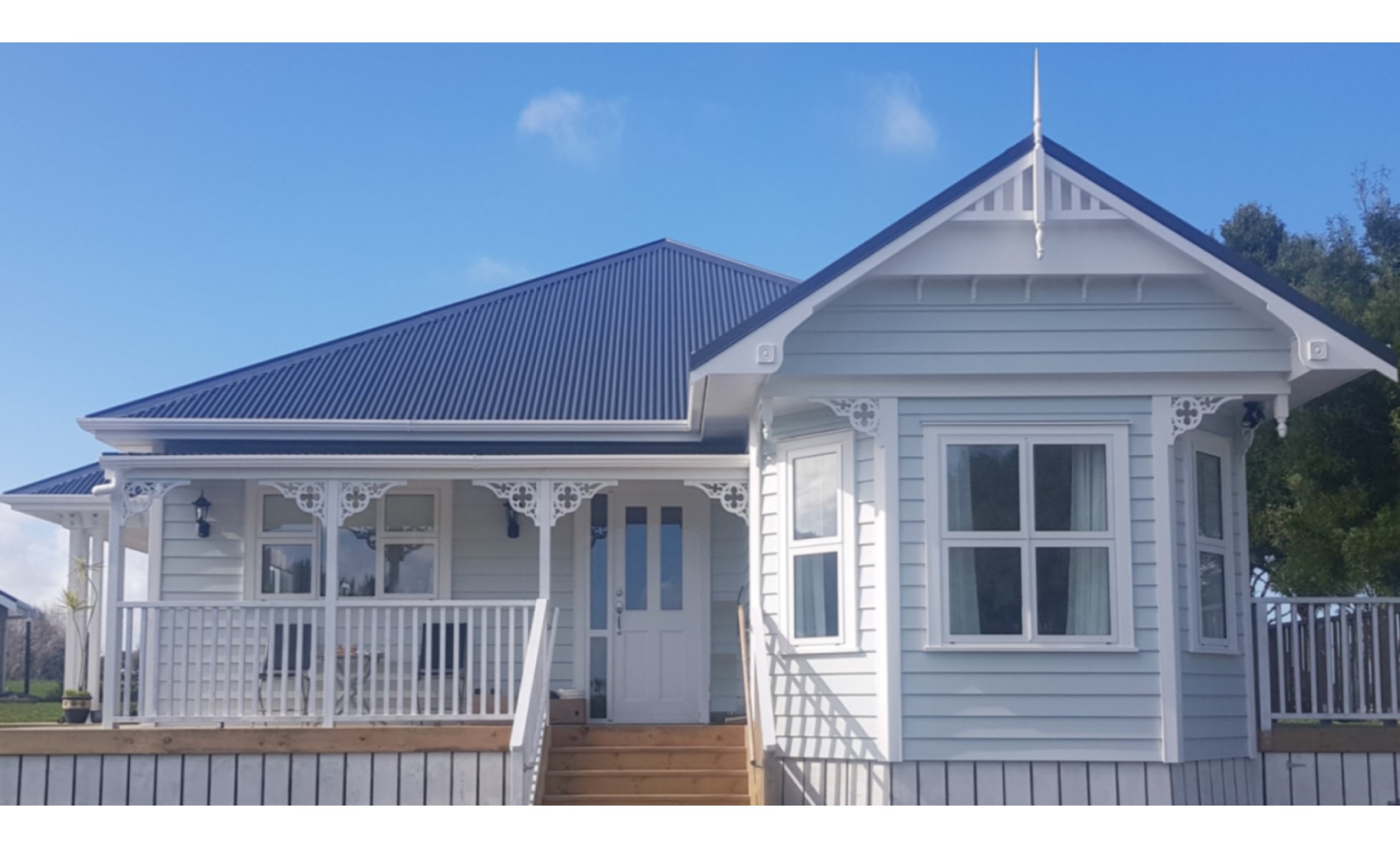
- Bungalows spread. The low, wide form with deep eaves and a generous porch was made for open settings, and it sits comfortably in a rural landscape.
- Villas command. On a rise or at the end of a drive, a villa's height and verandah give it presence that a low-slung design cannot match.
- Orientation matters more. Without neighbouring houses to constrain you, you can put the verandah and living rooms exactly where the sun is — a luxury urban sections rarely allow.
For the wider district — the towns covered, ground conditions and the three councils involved — see character home builders in Cambridge, Morrinsville and the Waikato.
The style comparison is in villa vs bungalow, and the full range of plans in villa house plans and bungalow house plans.
Sheds, barns and second dwellings
On a lifestyle block the outbuildings are part of the picture from the road, often more visible than the house. A modern shed beside a period home undoes a good deal of the effect, which is why Heritage Homes builds garages, cabins, barns and stables in matching detailing — covered in character garages, barns and outbuildings.
Rural sections also suit a second dwelling for family, guests or farm staff. Since 15 January 2026 a detached, self-contained dwelling of up to 70m² can be built without a building or resource consent where it meets the exemption criteria — the rules are in granny flat and sleepout rules. Rural zones are among those where a compliant minor dwelling is a permitted activity, which makes this genuinely useful on a block.
Your local team
Heritage Homes builds new villas, bungalows and cottages across New Zealand, working from an established plan range or a full custom design, and manages the consent process as part of the build. The Waikato is covered by the local Heritage Homes team — the quickest way to confirm coverage and availability for your site is a direct call on 0508 40 30 20.
Frequently asked questions
What extra costs come with building on a lifestyle block?
Wastewater treatment, water supply, power connection distance, the driveway and ground investigation. An on-site wastewater system is usually the largest single rural extra, and connection costs rise with distance from the road. The house itself costs much the same; it is the servicing and site works that differ from a town section.
Do I need a geotechnical report for a rural section in the Waikato?
It is strongly advisable, and often required. Rural land is rarely pre-tested, and parts of the Waikato basin sit on peat that compresses and shifts with the water table. Foundation design follows the geotechnical report, so getting one before you are committed to the land is what turns an unknown into a number.
Which character home style suits a lifestyle block?
Both work, differently. A bungalow's low, spreading form with deep eaves suits open rural settings and sits into the landscape. A villa's height and verandah give it presence on a rise or at the end of a drive. Without neighbouring houses constraining the layout, orientation to the sun can also drive the decision more than it can in town.
Can I build a second dwelling on a Waikato lifestyle block?
Often, yes. Since 15 January 2026, one detached self-contained dwelling of up to 70m² can be built without a building or resource consent where it meets the exemption criteria, and rural zones are among those where a compliant minor dwelling is a permitted activity. District plan rules still apply to the site, so confirm the position for your property.
Should I buy the land before choosing a house plan?
Price them together rather than sequentially. On a rural section the servicing, driveway and ground conditions can move the total significantly, and some plans suit a given contour and orientation far better than others. Buying land first and finding a plan afterwards is how lifestyle block budgets get away on people.
Talk to us about building in the Waikato
Prefer to talk? Call Heritage Homes on 0508 40 30 20 or email sales@hhomes.nz.